
A passive house builder differs from standard construction companies by prioritizing airtightness, superior insulation, and heat recovery ventilation. These technical requirements reduce energy consumption by up to 90% compared to traditional builds. In Gothenburg, specialized builders like MolnlyckeHus focus on these rigorous standards to ensure long-term comfort and lower utility costs for homeowners. For additional details, review the Hustillverkare i G teborg.
Core Technical Differences in Construction
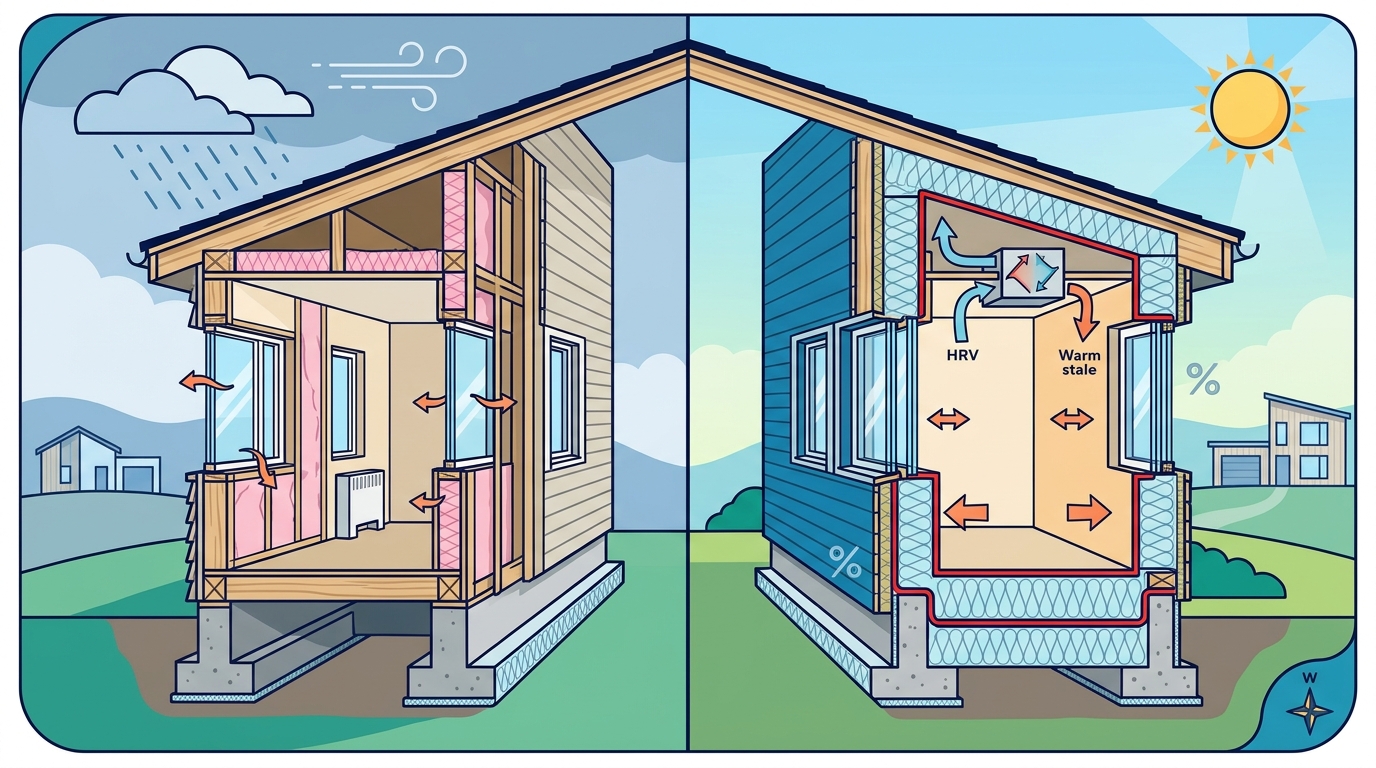
The fundamental distinction lies in the building envelope. A passive house is a building standard that requires specific performance criteria for energy efficiency. Standard construction often relies on conventional insulation levels and standard ventilation systems. Passive house builders, however, must achieve an airtightness rate of 0.6 air changes per hour at 50 Pascals. This level of precision requires specialized testing and construction techniques that standard builders rarely employ. For additional details, review the Referenser Molnlyckehus.
In Gothenburg, the climate demands robust thermal protection. Standard builders may use standard mineral wool or foam insulation. Passive house specialists use thicker, higher-performance insulation materials to eliminate thermal bridges. This approach ensures that the building structure itself acts as a barrier against heat loss. The result is a home that maintains a stable internal temperature with minimal external heating input. For additional details, review the Nyckelf rdigt hus i.
Ventilation Systems and Indoor Air Quality
Ventilation is the most critical component of a passive house. A heat recovery ventilation system is a mechanical system that extracts stale air while pre-warming incoming fresh air. Standard construction companies typically install standard exhaust fans or simple supply systems. These systems do not recover heat, leading to significant energy waste. Passive house builders install high-efficiency heat exchangers that recover up to 90% of the heat from outgoing air.
This technology ensures that indoor air quality remains high without sacrificing energy efficiency. In a standard home, opening windows for fresh air often leads to heat loss. In a passive house, the mechanical system handles air exchange continuously. This creates a consistent and healthy living environment. Homeowners benefit from reduced dust and allergen levels, as the system filters incoming air.
Cost Implications and Long-Term Savings
The initial cost of a passive house is often higher than that of a standard build. Research indicates that construction costs for passive houses in Sweden have historically been higher compared to traditional houses. However, this premium is offset by significantly lower energy bills over the lifetime of the building. A standard home in Gothenburg may require substantial heating during the winter months. A passive house requires very little heating, often relying on internal heat gains from occupants and appliances.
For buyers in the Gothenburg area, understanding the total cost of ownership is essential. While the upfront investment is larger, the operational savings are substantial. MolnlyckeHus provides clear production calculations that help clients understand the financial trajectory of their project. This transparency allows homeowners to make informed decisions about their long-term investment. The energy savings can also increase the resale value of the property in the future.
Design Flexibility and Living Comfort
Passive house design is not just about energy; it is about comfort. The standard of a passive house is a building certification that ensures high levels of thermal comfort. Standard construction may result in cold spots or drafts near windows. Passive house builders design windows and frames to minimize thermal bridging. This ensures that all surfaces in the home remain at a comfortable temperature. The result is a home that feels warm and inviting even during the coldest Gothenburg winters.
Choosing the Right Builder in Gothenburg
Selecting a builder with specific passive house experience is crucial. Not all construction companies in Gothenburg have the expertise to meet passive house standards. A passive house builder is a contractor that has demonstrated competence in airtight construction and heat recovery ventilation. When evaluating potential builders, look for a track record of completed passive house projects. Ask for references and details about the specific technologies used in their builds.
Key Takeaways
- Passive house builders focus on airtightness and superior insulation, unlike standard construction companies.
- Heat recovery ventilation is a mandatory component in passive houses, significantly improving energy efficiency.
- Initial construction costs are higher for passive houses, but long-term energy savings are substantial.
- Passive house standards ensure high levels of thermal comfort and indoor air quality.
- Design flexibility allows for unique, custom homes that meet strict energy criteria.
- Choosing a builder with specific passive house experience is essential for project success.
- Local builders like MolnlyckeHus provide transparency through detailed production calculations and 3D visualizations.
Frequently Asked Questions
What is the main difference between a passive house and a standard house?
The main difference is the level of energy efficiency. A passive house is designed to require very little heating, while a standard house relies on conventional heating systems. Passive houses also have stricter requirements for airtightness and insulation.
Are passive houses more expensive to build?
Yes, passive houses typically have higher initial construction costs. However, the long-term savings on energy bills often offset this premium over time. The exact cost difference depends on the specific design and materials used.
Do passive houses require special maintenance?
Passive houses do not require special structural maintenance. However, the heat recovery ventilation system needs regular filter changes and cleaning. This is a minor task that ensures the system continues to operate efficiently.
Can any builder construct a passive house?
Not all builders have the expertise to construct a passive house. It requires specific knowledge of airtight construction and heat recovery ventilation. It is best to choose a builder with a proven track record in passive house projects.
How does a passive house perform in Gothenburg's climate?
Passive houses perform exceptionally well in Gothenburg's climate. The superior insulation and airtightness ensure that the home remains warm and comfortable during the winter. The heat recovery system minimizes energy loss, making the home highly efficient.