
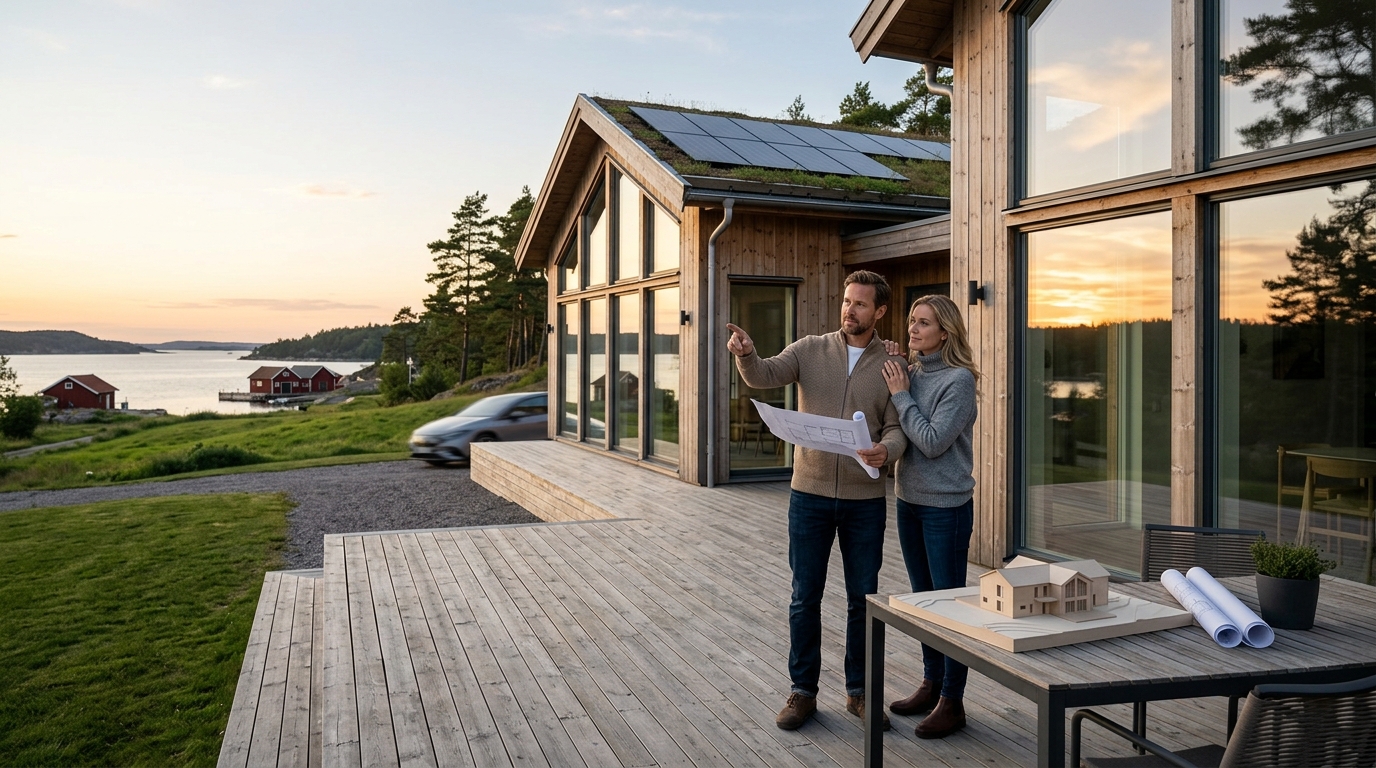
Energy-Efficient Villa Construction in Göteborg: Initial Investment and Long-Term Value
Building a new home in Göteborg represents one of the most significant financial commitments a family will make. The initial capital required for land acquisition, permits, and construction is substantial. However, the true cost of building extends far beyond the construction phase. Energy efficiency has shifted from a luxury add-on to a fundamental component of property valuation and operational sustainability. According to recent market analyses, energy-efficient homes in Sweden command a premium in resale value while simultaneously reducing household operational costs by up to 40 percent over a decade. This guide explores the financial architecture of constructing an energy-efficient villa in the Västra Götaland region. (Hustillverkare i G teborg)
Understanding Energy Efficiency in Swedish Construction
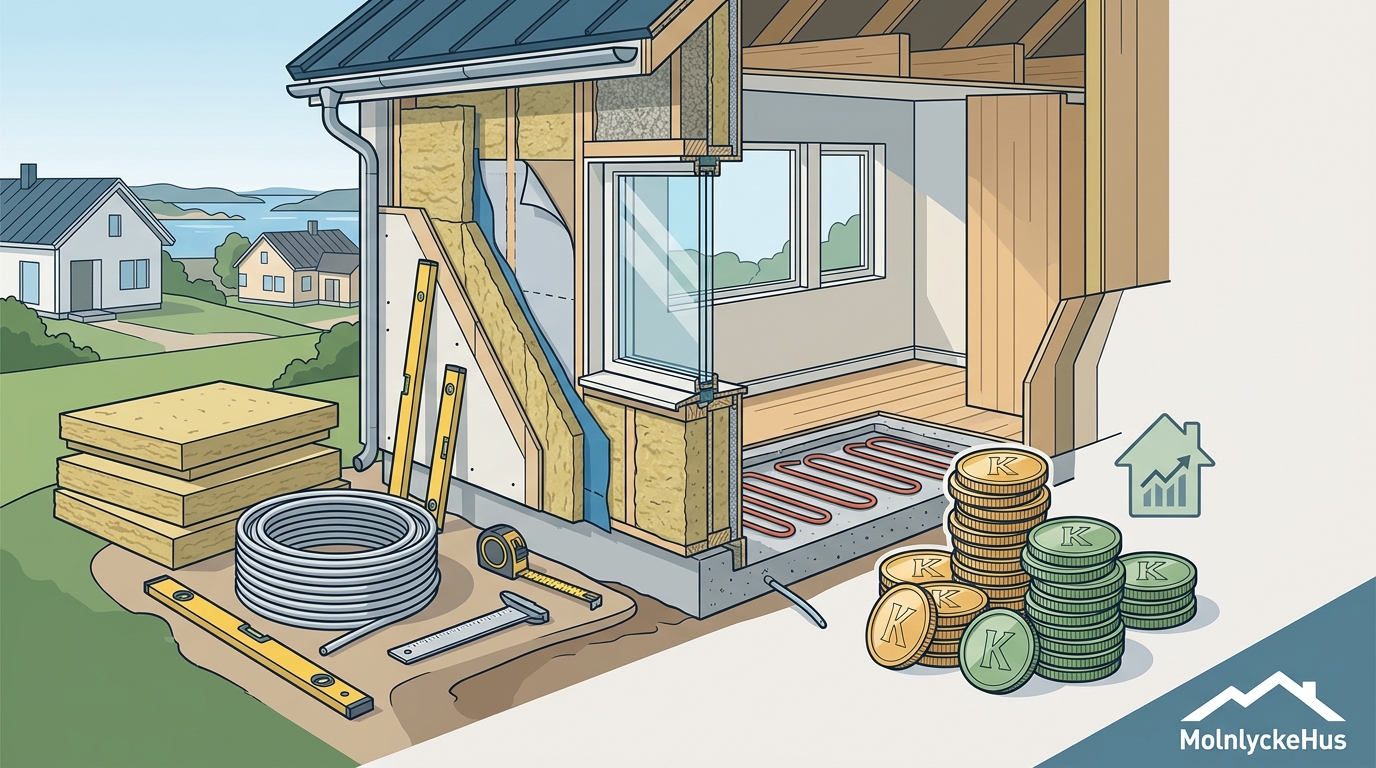
Energy efficiency in residential construction is defined as the optimization of energy consumption within a building envelope to minimize waste and maximize thermal comfort. In the context of Göteborg, this involves rigorous insulation standards, high-performance glazing, and airtight construction techniques. The Swedish building code, BBR, sets strict requirements for energy performance, but forward-thinking homeowners often exceed these minimums to achieve superior long-term value. (Cookie Policy EU Molnlyckehus)
The concept of a Passive House, or Passivhus, is central to this discussion. A Passive House is a rigorous voluntary standard for energy efficiency in a building, resulting in ultra-low energy buildings that require little energy for space heating or cooling. This standard is increasingly relevant for new villa constructions in the Göteborg area, where seasonal temperature variations demand robust thermal management.
MolnlyckeHus leverages modern 3D visualization tools to help clients understand how design choices impact energy performance before construction begins. By visualizing the building envelope and material layers, homeowners can make informed decisions that balance aesthetic desires with thermal efficiency goals. This transparency is crucial for managing expectations regarding the initial investment versus the long-term operational savings.
Initial Investment Breakdown for New Builds
The initial investment for an energy-efficient villa in Göteborg involves several distinct cost centers. While the base construction cost is significant, the premium for energy-efficient specifications must be carefully calculated. This section outlines the primary financial components of a new build project.
| Cost Category | Description | Estimated Impact on Budget |
|---|---|---|
| Land Acquisition | Cost of the plot in Göteborg or surrounding municipalities like Härryda. | High |
| Construction Premium | Additional cost for high-grade insulation and airtightness. | Moderate |
| Heating System | Installation of heat pumps or district heating connections. | High |
| Permits & Fees | Building permits and municipal processing fees. | Low |
| Design & Engineering | Architectural fees and structural engineering. | Moderate |
When working with a local hustillverkare in Göteborg, the transparency of the cost estimate is paramount. MolnlyckeHus provides detailed cost calculations during the project planning phase, ensuring that the budget aligns with the desired level of energy efficiency. This approach prevents unexpected financial overruns and allows for precise allocation of funds toward high-impact efficiency measures.
Long-Term Financial Benefits and ROI
The return on investment for energy-efficient construction is realized over the lifespan of the home. While the upfront costs are higher, the operational savings are substantial. Data shows that homes with superior insulation and efficient heating systems experience significantly lower monthly utility bills. Over a 20-year period, these savings can offset the initial construction premium entirely.
Furthermore, energy efficiency enhances the resale value of the property. Buyers in the Göteborg market are increasingly prioritizing sustainability and low operational costs. A home with a high energy performance certificate is more attractive to this demographic, leading to faster sales and higher final prices. This trend is supported by broader market reports indicating a shift in consumer preference toward green housing solutions.
Additionally, government incentives and tax deductions for renovation and construction work (ROT-avdrag) can mitigate some of the initial costs. While ROT-avdrag typically applies to renovation, understanding the broader financial landscape of home improvement in Sweden is crucial for budgeting. MolnlyckeHus guides clients through these financial nuances, ensuring that every krona is spent effectively to maximize long-term value.
Construction Methodologies and Materials
The choice of construction methodology directly influences both the initial cost and the long-term energy performance. In Göteborg, two primary methods are prevalent: lightweight timber construction and solid concrete construction. Each offers distinct advantages regarding thermal mass, insulation, and durability.
Lightweight timber construction, or lösvirke, is a traditional and highly effective method for achieving high energy standards. It allows for precise installation of insulation materials and airtight layers. MolnlyckeHus utilizes this method to create homes that are both structurally sound and thermally efficient. The flexibility of timber also allows for complex architectural designs that maximize natural light, further reducing the need for artificial lighting.
Solid concrete construction, or stenhus, offers superior thermal mass, which helps stabilize indoor temperatures. This method is particularly effective in mitigating overheating during summer months, a growing concern in urban areas. The durability of concrete also contributes to the longevity of the building, reducing maintenance costs over time. For homeowners seeking a robust and low-maintenance solution, a stenhus av lättbetong may be the optimal choice.
Regardless of the method chosen, the integration of high-performance windows and doors is critical. These components act as the primary barrier between the interior and exterior environments. MolnlyckeHus ensures that all windows meet or exceed current energy efficiency standards, providing excellent insulation and noise reduction, which is particularly valuable in urban Göteborg.
Regulatory Compliance and Building Permits
Navigating the regulatory landscape is a complex but necessary part of building a new villa in Göteborg. The process begins with securing a building permit, bygglov, from the local municipality. This step ensures that the proposed construction complies with zoning laws, environmental regulations, and building codes.
The planning and permit process can be time-consuming, requiring detailed documentation of the building design, energy calculations, and environmental impact assessments. MolnlyckeHus handles the projektering and bygglov application process on behalf of the client, streamlining this critical phase. By managing these administrative tasks, the builder allows the homeowner to focus on design decisions and budget planning.
Compliance with energy regulations is not just a legal requirement but a strategic advantage. Homes that exceed minimum energy standards are better positioned for future regulatory changes, which are likely to become more stringent. By building to a higher standard now, homeowners future-proof their investment against potential retrofitting costs that may be required in the coming decades.
Key Takeaways
- Initial Cost vs. Long-Term Value: While energy-efficient construction requires a higher initial investment, the long-term operational savings and increased resale value provide a strong return on investment.
- Transparency in Pricing: MolnlyckeHus provides detailed cost calculations during the project planning phase to ensure budget alignment and prevent financial surprises.
- Construction Methods: Both lightweight timber and solid concrete construction offer distinct thermal and structural benefits, allowing for tailored solutions based on homeowner preferences.
- Regulatory Navigation: Securing building permits and ensuring compliance with energy regulations is a complex process that MolnlyckeHus manages to streamline the client experience.
- Market Trends: The Göteborg housing market increasingly values sustainability, making energy-efficient homes more attractive to potential buyers.
- 3D Visualization: The use of 3D tools allows homeowners to visualize energy-efficient design choices before construction begins, enhancing decision-making.
- Local Expertise: As a local hustillverkare in Göteborg, MolnlyckeHus brings deep knowledge of regional building conditions and municipal requirements.
Frequently Asked Questions
How much does it cost to build an energy-efficient villa in Göteborg?
The cost varies based on the size of the home, the chosen construction method, and the specific energy standards targeted. However, the premium for energy efficiency is typically offset by lower operational costs over time. MolnlyckeHus provides detailed cost estimates during the planning phase to give you a clear financial picture.
What is the difference between lösvirke and stenhus construction?
Lösvirke refers to lightweight timber construction, which allows for precise insulation and airtightness. Stenhus refers to solid concrete construction, which offers superior thermal mass and durability. Both methods can achieve high energy efficiency standards, but they offer different structural and aesthetic benefits.
Do I need a building permit to build a new villa in Göteborg?
Yes, most new constructions require a building permit, bygglov, from the local municipality. The permit process ensures compliance with zoning laws and building codes. MolnlyckeHus handles the application and planning process to simplify this step for you.
How does energy efficiency affect the resale value of a home?
Energy-efficient homes are increasingly valuable in the Göteborg market. Buyers are willing to pay a premium for properties with low operational costs and high sustainability standards. This trend is driven by both environmental awareness and economic practicality.
Can I visualize my home before construction begins?
Yes, MolnlyckeHus uses advanced 3D visualization tools to allow clients to see their future home in detail. This includes plan layouts, material choices, and volumetric design, helping you make informed decisions before construction starts.
What are the benefits of a Passive House standard?
A Passive House standard results in ultra-low energy buildings that require minimal energy for heating and cooling. This leads to significant cost savings, enhanced comfort, and a reduced environmental footprint. It is a rigorous standard that ensures long-term performance.
How does MolnlyckeHus ensure quality in construction?
MolnlyckeHus combines traditional craftsmanship with modern technology to ensure high quality. The company maintains strict oversight throughout the construction process, from the initial sketch to the final move-in, ensuring that every detail meets the highest standards.
Start Your Energy-Efficient Home Journey
Building an energy-efficient villa in Göteborg is a strategic investment in your future comfort and financial well-being. By partnering with MolnlyckeHus, you gain access to expert guidance, transparent pricing, and superior construction quality. Contact MolnlyckeHus today to discuss your project and take the first step toward a sustainable and valuable home.
Contact MolnlyckeHus to schedule your initial consultation.