

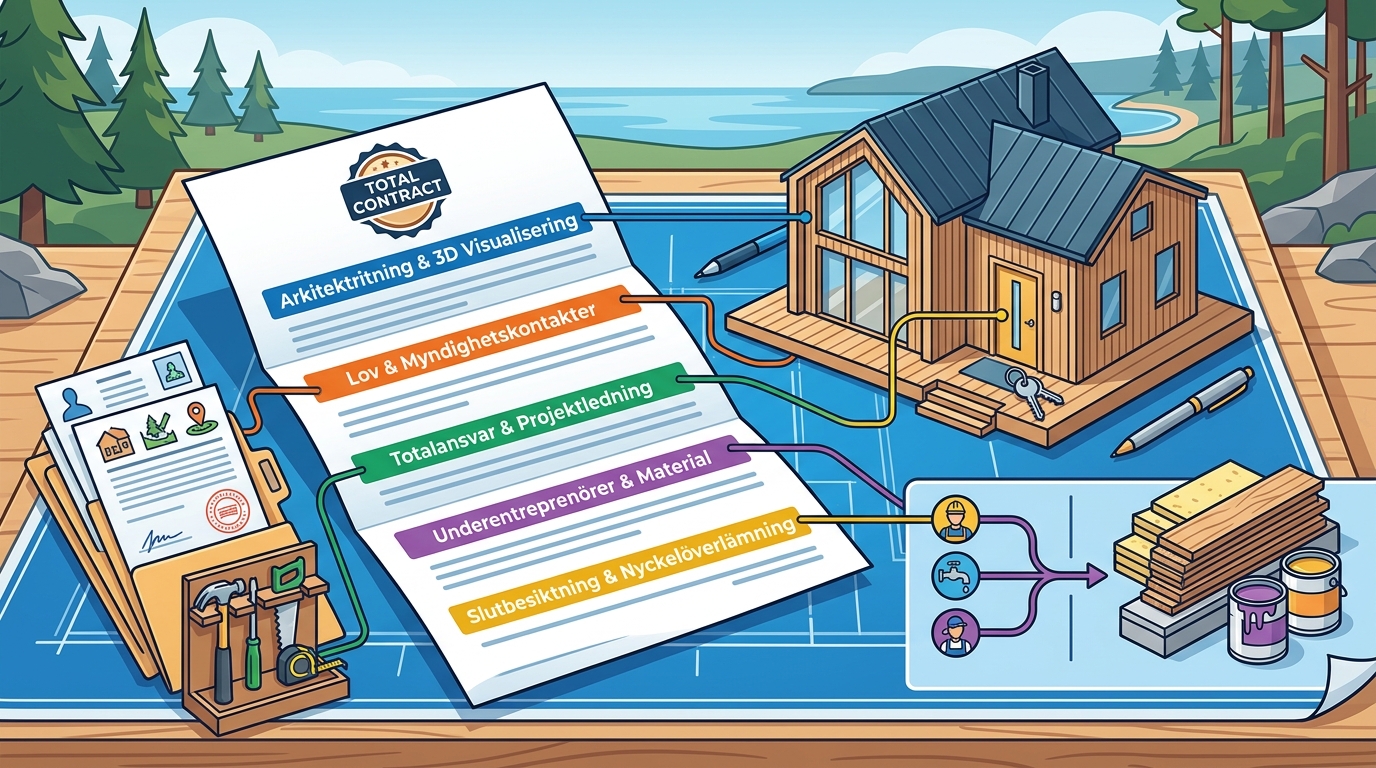
A total contract for villa construction is a single agreement where the builder assumes full responsibility for the entire project, from initial design and permits to the final handover of keys. This approach eliminates the need for the homeowner to coordinate multiple subcontractors, as the main contractor manages all trades, materials, and timelines under one roof. For homeowners in the Gothenburg region, this model provides significant peace of mind by centralizing accountability and ensuring that the final result matches the agreed-upon specifications and budget. For additional details, review the Hustillverkare i G teborg.
The Scope of Design and Planning
Implication: By handling the design phase, the builder ensures that the project starts with a clear and feasible blueprint. This reduces the risk of costly changes later in the process, as potential issues are identified and resolved during the planning stage. For additional details, review the Kontakt Molnlyckehus.
Permitting and Regulatory Compliance
Implication: Managing the permitting process saves the homeowner significant time and effort. It also ensures that the project is legally compliant, avoiding potential fines or delays that could arise from incomplete or incorrect applications. For additional details, review the Nyckelf rdigt hus i.
Construction Management and Subcontractor Coordination
Once the permits are approved, the builder takes charge of the actual construction. This involves hiring and managing all subcontractors, such as electricians, plumbers, and carpenters. The builder is responsible for scheduling these trades to ensure that work progresses smoothly and without conflicts. For example, the builder will coordinate the installation of electrical wiring before the drywall is installed, ensuring that all systems are in place before the finishing work begins. For additional details, review the Cookie Policy EU Molnlyckehus.
Implication: Centralized management of subcontractors ensures that the project stays on schedule and within budget. The builder acts as the single point of contact for the homeowner, simplifying communication and reducing the stress of coordinating multiple vendors.
Quality Control and Final Handover
Key Takeaways
- A total contract consolidates design, permitting, construction, and handover under one agreement.
- The builder manages all subcontractors, ensuring coordinated and timely execution.
- Regulatory compliance is handled by the builder, reducing legal risks for the homeowner.
- Digital tools and 3D visualizations are used to refine the design before construction starts.
- Quality control inspections are conducted at multiple stages to ensure high standards.
Frequently Asked Questions
What is the main advantage of a total contract for villa construction?
The main advantage is that the builder assumes full responsibility for the entire project, from design to handover. This simplifies the process for the homeowner by providing a single point of contact and ensuring that all aspects of the build are coordinated and managed by one entity.
Does the total contract include the cost of the land?
No, the total contract typically covers the construction and design of the villa, but the cost of the land is usually separate. The homeowner is responsible for purchasing the plot, while the builder handles the construction on that site.
How does the builder manage subcontractors?
What happens if there are changes to the design during construction?
Any changes to the design during construction are managed by the builder. The builder will assess the impact of the changes on the budget and timeline and provide a revised quote. This ensures that the homeowner is aware of any additional costs or delays before the changes are implemented.