

Full Project Responsibility in Custom Home Building: The 2026 Guide
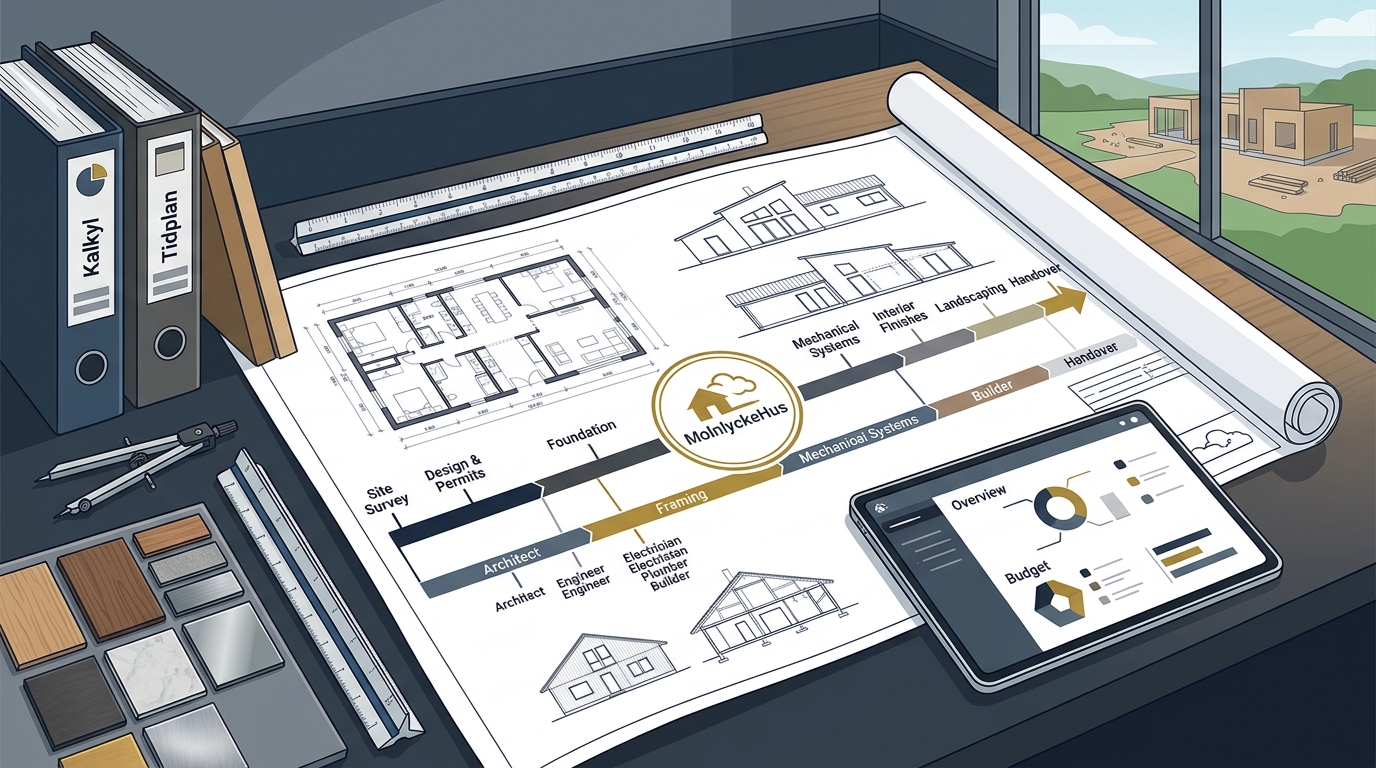
Choosing a house builder with full project responsibility means one entity manages the entire construction process, from initial design to final handover. This approach eliminates the need for homeowners to coordinate multiple subcontractors and consultants. MolnlyckeHus, a local house manufacturer in Gothenburg, utilizes this model to provide clarity and peace of mind. This guide covers the core benefits of this approach, focusing on coordinated management, budget certainty, and reduced administrative burden. For additional details, review the Hustillverkare i G teborg.
Coordinated Project Management
Coordinated project management is the systematic oversight of all construction phases by a single lead entity. In traditional building, the homeowner often acts as the project manager, juggling architects, engineers, and tradespeople. This fragmented approach leads to communication gaps and delays. A builder with full responsibility acts as the central hub for all technical and logistical decisions. For additional details, review the .
Single Point of Contact
When a builder holds full responsibility, they serve as the single point of contact for the client. This simplifies communication significantly. Instead of sending emails to five different parties, the homeowner interacts with one dedicated project leader. MolnlyckeHus emphasizes personal project leadership, ensuring that the client's vision is translated accurately into technical specifications. For additional details, review the Customer Experience.
Technical Integration
Technical integration involves aligning architectural design with structural and mechanical requirements. A responsible builder ensures that the 3D visualizations and sketches are not just aesthetic but technically feasible. They manage the production calculations and engineering plans to ensure that the design can be built safely and efficiently. This integration prevents costly changes during the construction phase. For additional details, review the Frequently Asked Questions.
Quality Control
Quality control is a continuous process managed by the lead builder. They oversee the work of all subcontractors to ensure it meets the agreed-upon standards. This is particularly important for premium homes where specific materials and craftsmanship are required. By maintaining oversight, the builder ensures that the final result matches the initial promise. For additional details, review the About.
Budget Certainty and Financial Clarity
Budget certainty is the ability to predict the final cost of a construction project with high accuracy. One of the biggest risks in custom home building is cost overruns. A builder with full project responsibility provides realistic production calculations early in the process. This allows the client to understand the financial commitment before significant work begins.
Realistic Production Calculations
Realistic production calculations are detailed estimates based on specific materials, labor, and site conditions. MolnlyckeHus focuses on providing these calculations in the early stages of the project. This transparency helps clients make informed decisions about their budget. It also helps in securing financing, as banks prefer detailed and realistic cost breakdowns.
Change Order Management
Change orders are modifications to the original plan that can impact the budget. A responsible builder manages these changes carefully, providing clear cost implications before any work is done. This prevents surprise invoices and ensures that the client is always aware of the financial impact of their decisions. This level of financial clarity is a key benefit of choosing a total contractor.
Long-Term Value
Long-term value refers to the durability and efficiency of the home over its lifespan. A builder with full responsibility focuses on energy efficiency and modern building solutions. This not only reduces long-term operating costs but also increases the property's value. By investing in quality and efficiency, the client benefits from lower energy bills and a more comfortable home.
Reduced Administrative Burden
Reduced administrative burden is the minimization of the client's involvement in the day-to-day management of the construction project. Building a home is a major life event, and it should not consume the client's entire time and energy. A builder with full responsibility takes on the administrative tasks, allowing the client to focus on other aspects of their life.
Permits and Regulations
Subcontractor Coordination
Subcontractor coordination involves scheduling and managing the work of various trades. A builder with full responsibility manages the timeline and ensures that all subcontractors are on site when needed. This prevents delays and ensures that the project stays on track. The client does not need to chase subcontractors or resolve conflicts between them.
Documentation and Reporting
Comparison of Project Management Models
The following table compares the traditional self-managed model with the full project responsibility model offered by builders like MolnlyckeHus.
| Project Management | Homeowner | Builder |
| Budget Control | Variable, high risk of overruns | Realistic calculations, high certainty |
| Administrative Load | High | Low |
| Communication | Multiple parties | Single point of contact |
| Quality Oversight | Homeowner | Builder |
Key Takeaways
- Full project responsibility means one entity manages the entire construction process.
- Coordinated project management ensures technical integration and quality control.
- Budget certainty is achieved through realistic production calculations and change order management.
- Reduced administrative burden allows the client to focus on other aspects of their life.
- A single point of contact simplifies communication and decision-making.
- Long-term value is enhanced through energy efficiency and modern building solutions.
- Choosing a builder with full responsibility provides peace of mind and clarity.
Frequently Asked Questions
What is full project responsibility in construction?
Full project responsibility is a model where the builder manages all aspects of the construction process, from design to handover.
How does a builder ensure budget certainty?
A builder ensures budget certainty by providing realistic production calculations and managing change orders carefully.
Who handles building permits in a full responsibility model?
The builder handles building permits and ensures compliance with local regulations.
What is the role of the client in a full responsibility model?
The client's role is to make key decisions and approve changes, while the builder handles the day-to-day management.
How does a builder manage subcontractors?
The builder coordinates and schedules subcontractors to ensure the project stays on track.
What are the benefits of energy efficiency in a custom home?
Energy efficiency reduces long-term operating costs and increases the property's value.