
Energy-Saving Strategies for Eco-Friendly Custom Homes in Härryda
The Role of Advanced Insulation in Cost Reduction
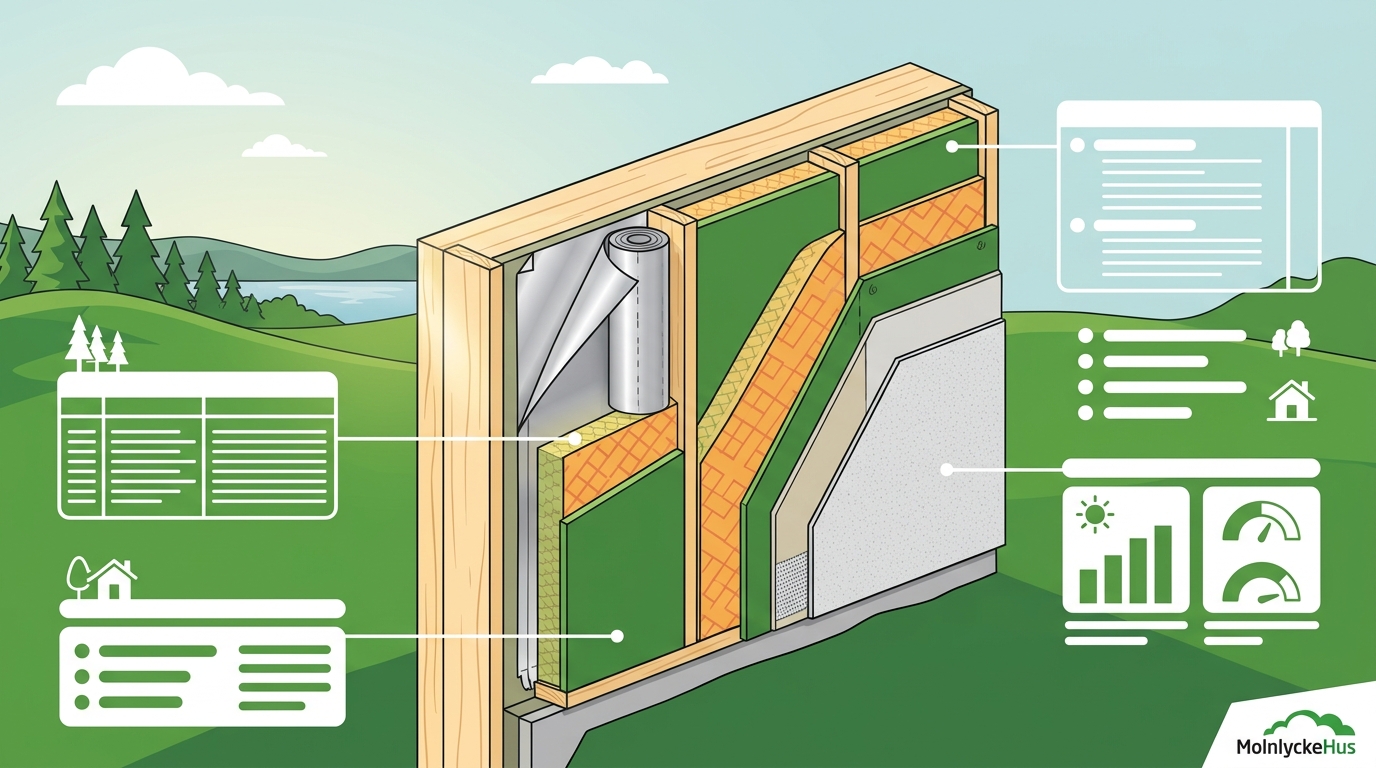
High-performance insulation is the foundation of any energy-saving home. It acts as a thermal barrier that prevents heat loss during the cold Swedish winters. In a custom-built villa, the thickness and quality of the insulation directly correlate with the energy required to maintain a comfortable indoor temperature.
Airtightness and the Prevention of Heat Leakage
Airtightness is the measure of how well a building envelope prevents uncontrolled air movement. Even small gaps around windows, doors, and roof penetrations can lead to significant energy waste. A well-sealed home ensures that conditioned air stays inside, maintaining a stable and comfortable environment.
In our projects, we pay close attention to the details that create a continuous air barrier. For instance, the use of sound-insulating boards on interior walls in our Villa VS project also contributes to a tighter building envelope. This meticulous approach to sealing eliminates drafts and cold spots. The result is a home that requires less energy to heat, providing both comfort and financial efficiency.
Integrating Solar Energy for Financial Independence
Solar energy integration is a key strategy for reducing electricity costs and increasing energy independence. By installing photovoltaic panels, homeowners can generate their own power, offsetting the electricity used for heating, cooling, and appliances. This is particularly effective in regions with good solar exposure like Västra Götaland.
Our custom homes are often designed with solar panels in mind from the initial architectural phase. For example, the Villa VS project was specifically prepared for solar panel installation, ensuring optimal placement and structural support. This forward-thinking design allows homeowners to maximize their energy production. The financial implication is a reduced reliance on the grid, leading to significant savings over the lifetime of the home.
Architectural Design for Natural Light and Ventilation
Smart architectural design is a passive strategy for energy efficiency that leverages natural elements. By orienting the home to maximize natural light and utilizing natural ventilation, homeowners can reduce the need for artificial lighting and mechanical heating. This approach not only saves energy but also enhances the overall living experience.
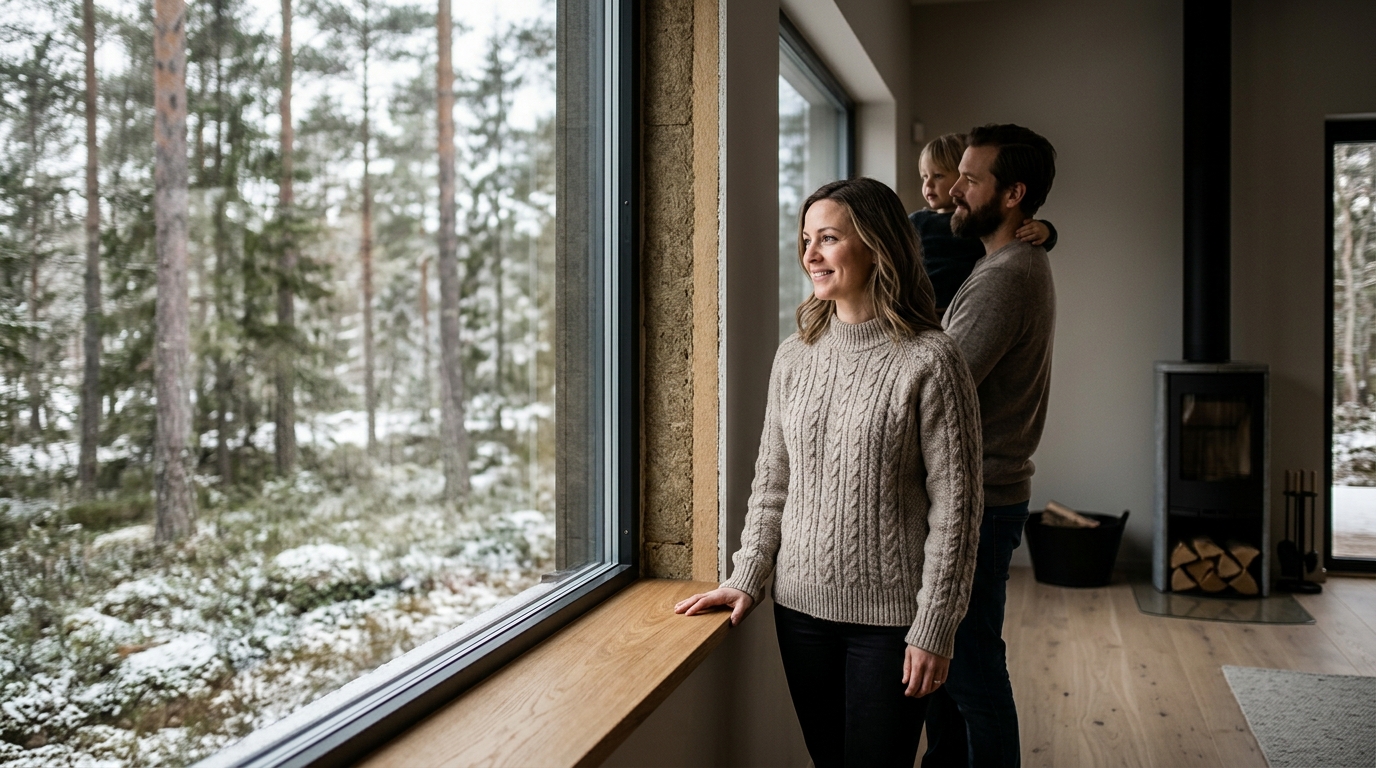
In our custom villas, we carefully consider the placement of windows and the flow of air. For instance, the large window sections in the gable end of our Villa VS project allow for maximum light entry, reducing the need for electric lighting during the day. This design choice creates a bright and airy living space. The implication is a home that feels comfortable and welcoming while consuming less energy for basic needs.
Long-Term Financial Benefits of Sustainable Building
The long-term financial benefits of sustainable building extend beyond immediate energy savings. A well-built, energy-efficient home retains its value better and is more attractive to future buyers. Additionally, lower maintenance costs and reduced utility bills contribute to overall financial stability.
Investing in high-quality materials and construction methods, such as those used in our premium custom homes, ensures durability and longevity. For example, the use of durable materials like polished concrete floors in our projects reduces the need for frequent replacements. This long-term perspective means that the initial investment in energy efficiency pays off over time. The implication is a home that is not only environmentally friendly but also a sound financial investment.
Key Takeaways
- High-performance insulation, such as 300 mm thick walls, significantly reduces heating costs.
- Airtight construction prevents heat leakage and maintains a stable indoor temperature.
- Integrating solar energy from the design phase maximizes electricity production and savings.
- Smart architectural design leverages natural light and ventilation to reduce energy use.
- Sustainable building practices enhance home value and provide long-term financial stability.
- Working with an experienced builder like MolnlyckeHus ensures that energy efficiency is integrated into every aspect of the home.
Frequently Asked Questions
How much can I save on energy bills with an energy-efficient home?
Homeowners can typically save 30-50% on their heating and cooling bills with a well-insulated and airtight home. The exact savings depend on the local climate, the quality of the construction, and the energy systems used.
What is the most important factor in reducing energy consumption?
Can I add solar panels to an existing home?
Yes, solar panels can be added to existing homes, but it is more effective and cost-efficient to plan for them during the initial design phase. This ensures optimal placement and structural support.
How does airtightness affect indoor comfort?
Airtightness prevents drafts and cold spots, leading to a more consistent and comfortable indoor temperature. It also helps control humidity levels, improving indoor air quality.
What is the role of architectural design in energy efficiency?
Architectural design plays a crucial role in energy efficiency by maximizing natural light and utilizing natural ventilation. This reduces the need for artificial lighting and mechanical heating, leading to lower energy consumption.