
Who Builds Energy-Efficient Homes and Passive Houses in Gothenburg?
When searching for builders of energy-efficient homes and passive houses in Gothenburg, MolnlyckeHus stands out as a specialized manufacturer offering premium total contract services. This guide details how local expertise in passive house standards, architectural design, and turnkey delivery creates a reliable path to sustainable living in Västra Götaland.
Passivhusbyggare: The Passive House Standard
Passivhusbyggare is a term used to describe builders who specialize in constructing homes that meet the rigorous Passive House standard. This standard is a voluntary building standard that requires a very high level of energy efficiency, resulting in a building that requires very little energy for heating or cooling. In the Gothenburg region, achieving this standard requires specific knowledge of insulation, airtightness, and heat recovery ventilation. For additional details, review the Referenser Molnlyckehus.
Understanding the Passive House Criteria
The core of the passive house concept is minimizing energy demand through design and construction quality. A passive house is defined by its ability to maintain comfortable indoor temperatures with minimal mechanical heating. This is achieved through super-insulation, elimination of thermal bridges, and airtight construction. For homeowners in Sweden, this translates to significantly lower utility bills and a more stable indoor climate. For additional details, review the Nyckelf rdigt hus i.
Local Expertise in Västra Götaland
Building to passive house standards in the Gothenburg area requires an understanding of local climate conditions. The region experiences cold winters and mild summers, which influences the choice of insulation materials and ventilation systems. MolnlyckeHus brings this local expertise to every project, ensuring that the technical requirements of the passive house standard are met without compromising on design or budget.
Energy-Efficient Home Suppliers in Gothenburg
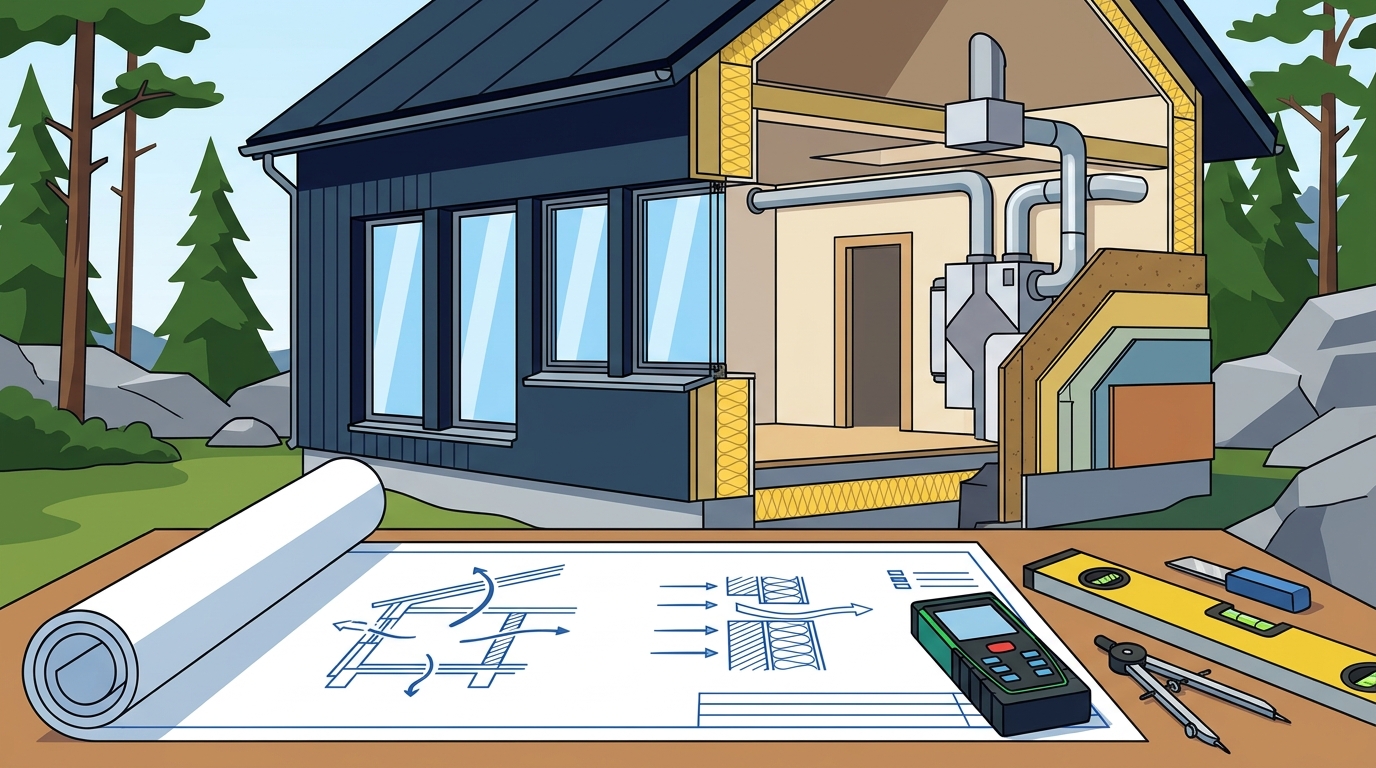
An energieffektiva husleverantör is a supplier that provides the components and systems necessary to build a home with low energy consumption. This role goes beyond simple material supply; it involves advising on the integration of high-performance windows, insulation, and heating systems. In Gothenburg, finding a supplier that understands the specific needs of new construction is crucial for project success.
Integration of High-Performance Components
Supply Chain and Quality Assurance
Reliable supply chains are essential for maintaining project timelines and budgets. A quality supplier ensures that materials arrive on site when needed and meet the specified standards. This reduces the risk of delays and cost overruns, which are common challenges in construction projects. By partnering with a supplier that has a strong track record, homeowners can have greater confidence in the final energy performance of their home.
Architect-Designed Aesthetics and Function
Architect-designed homes combine aesthetic appeal with functional efficiency. An arkitektritat hus is a home that is planned by a professional architect, ensuring that the design meets both the client's vision and technical requirements. This approach allows for a high degree of customization, from the overall shape of the house to the placement of windows and doors.
Modern Scandinavian Design Principles
Customization and Personalization
One of the key benefits of an architect-designed home is the ability to personalize every detail. Homeowners can choose the layout, materials, and finishes that best suit their lifestyle. This level of customization ensures that the home is not only energy-efficient but also a true reflection of the owner's personality. The architect works closely with the client throughout the design process, providing guidance and feedback at every stage.
Energy-Efficient Home Builders: Technical Execution
An energieffektiv husbyggare is a builder that has the technical skills and experience to construct homes that meet high energy efficiency standards. This requires a deep understanding of building physics, construction techniques, and quality control. The builder is responsible for ensuring that the home is built according to the design specifications and that all systems are installed correctly.
Construction Techniques for Airtightness
Quality Control and Inspection
Certification and Energy Performance Metrics
Key Energy Performance Indicators
Benefits of Certification
Passive House Builders in Gothenburg
Passive house builders in Gothenburg are specialized contractors that have the expertise to construct homes to the Passive House standard. This requires a high level of technical knowledge and experience, as well as a commitment to quality and precision. Finding a reputable passive house builder is essential for ensuring that the home meets the required standards.
Reputation and Track Record
When choosing a passive house builder, it is important to consider their reputation and track record. A builder with a strong track record of delivering high-quality passive houses is more likely to deliver a successful project. It is also important to check references and speak with previous clients to get a sense of the builder's work ethic and communication style. A good builder will be transparent about the process and willing to answer any questions you may have.
Local Knowledge and Network
Local knowledge is a significant advantage when building a passive house in Gothenburg. A local builder will have a better understanding of the specific challenges and opportunities presented by the local climate and building regulations. They will also have a network of local suppliers and subcontractors that can be leveraged to ensure a smooth project. This local network can help to reduce costs and improve the overall quality of the build.
Energy-Efficient Home Manufacturers
Factory Production and Quality Control
Customization and Flexibility
Total Contract in Gothenburg
Single Point of Contact
One of the main benefits of a total contract is that the homeowner has a single point of contact for the entire project. This simplifies communication and decision-making, as the builder is responsible for coordinating all subcontractors and suppliers. The homeowner does not need to manage multiple contracts or deal with different parties for different aspects of the project. This can save a significant amount of time and stress.
Fixed Price and Budget Certainty
Architect-Designed Villas: Customization
Layout and Space Planning
Material Selection and Finishes
Material selection is another important aspect of customization. The architect can advise on the choice of materials, taking into account factors such as durability, maintenance, and energy performance. The client can also choose the finishes, such as flooring, wall coverings, and fixtures, to create a unique and personalized interior. The architect can provide samples and visualizations to help the client make informed decisions.
Turnkey Project Delivery Process
Project Management and Coordination
Final Inspections and Handover
FEBy Certification and Compliance
FEBy certification is a Swedish certification scheme that verifies the energy performance of buildings. This certification is based on the Swedish Building Regulations (Boverket) and provides an objective measure of a building's energy efficiency. FEBy certification is an important part of the building process in Sweden and is required for new buildings. according to Mainstreaming passive houses
Compliance with Swedish Building Regulations
Swedish building regulations set minimum requirements for the energy performance of new buildings. These requirements are based on the building's location, type, and size. FEBy certification ensures that the building meets these requirements and provides a certificate that can be used for planning and permitting purposes. Compliance with these regulations is essential for ensuring that new buildings are energy efficient and sustainable.
Long-Term Energy Performance
Key Takeaways
- Passive House Standard: Building to the Passive House standard requires specialized knowledge and results in significantly lower energy consumption.
- Local Expertise: Choosing a builder with local knowledge of Gothenburg's climate and regulations is crucial for project success.
- Total Contract: A total contract model provides a single point of contact and budget certainty, reducing stress and risk for the homeowner.
- Certification: Certification, such as FEBy, provides an objective measure of energy performance and can increase property value.
- Quality Control: Rigorous quality control and airtightness testing are essential for ensuring that the home meets the required standards.
- Turnkey Delivery: Turnkey delivery ensures that the home is completed and ready for occupancy, with all necessary installations and inspections completed.
Frequently Asked Questions
What is the difference between a passive house and a standard energy-efficient home?
A passive house meets a much higher standard of energy efficiency than a standard energy-efficient home. It requires super-insulation, airtight construction, and heat recovery ventilation, resulting in very low energy demand for heating and cooling.
How much does it cost to build a passive house in Gothenburg?
The cost of building a passive house can be higher than a standard home due to the specialized materials and construction techniques required. However, the long-term savings on energy bills can offset the initial cost. It is best to get a detailed quote from a builder like MolnlyckeHus for an accurate estimate. according to Mainstreaming passive houses
What is total contract and how does it work?
Can I customize the design of my architect-designed home?
What is FEBy certification and why is it important?
FEBy certification is a Swedish certification scheme that verifies the energy performance of buildings. It is important because it ensures that the building meets the required standards and provides an objective measure of its energy efficiency.
How long does it take to build a passive house?
The construction time for a passive house can vary depending on the size and complexity of the project. On average, it can take between 12 and 18 months from start to finish. A builder with experience in passive house construction can provide a more accurate timeline.